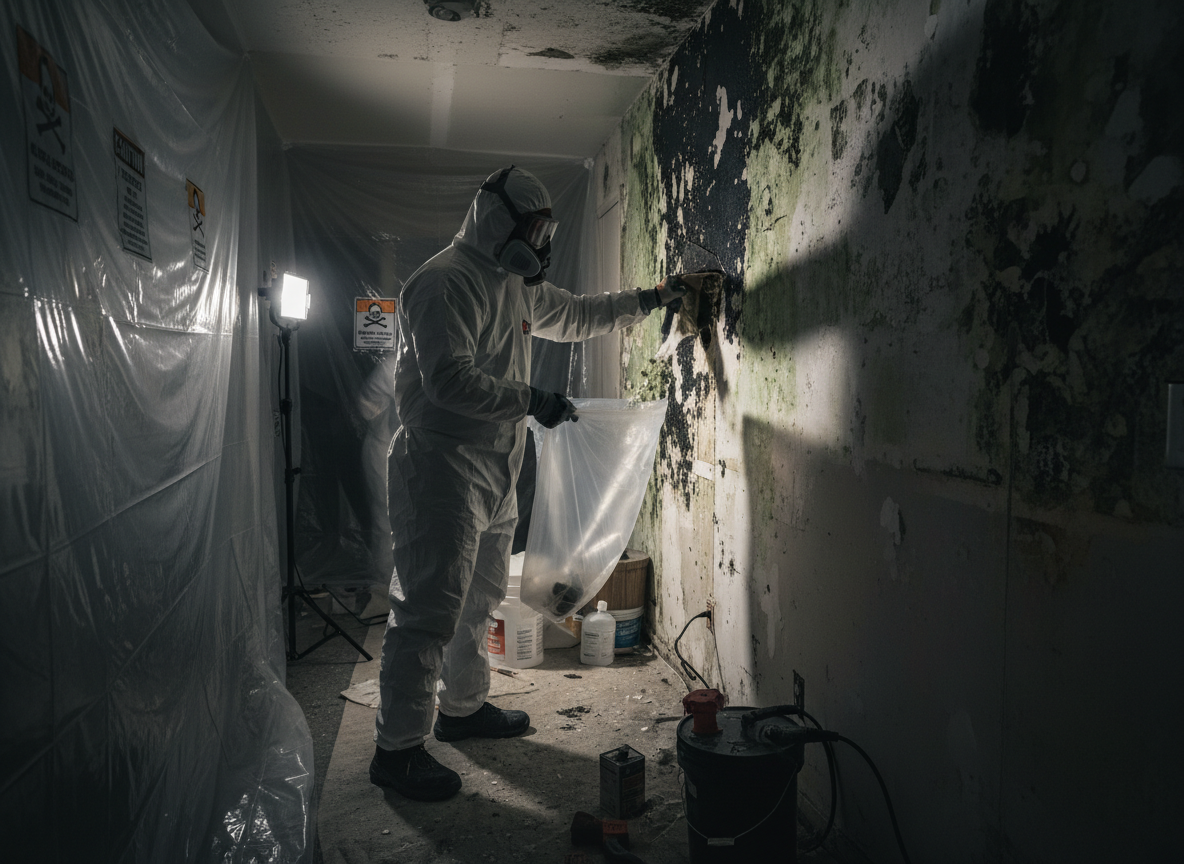
La Crescenta sits in the foothills with many homes built before 1970 that feature plaster walls, crawl spaces, and limited ventilation. These conditions let water from roof leaks or plumbing failures stay trapped long enough for toxic mold colonies to establish behind surfaces. Mild Mediterranean summers keep daytime humidity low but winter rains and cool nights create condensation on north-facing walls in La Crescenta Highlands and Montrose. Removal crews must isolate rooms with negative air machines and HEPA filtration to keep spores from drifting into living spaces during demolition.
In Verdugo City and along Foothill Boulevard corridors, stucco exteriors often hide saturated sheathing once irrigation or window leaks occur. Standard visual checks miss growth inside wall cavities or under subfloors, so air sampling and moisture mapping guide the scope. Los Angeles County health rules require proper disposal of contaminated materials at approved landfills rather than regular construction waste streams. Homeowners in La Canada Flintridge and Pasadena who delay inspection after a single heavy rain often face larger hidden colonies that cross into adjacent rooms.
Clearance testing after removal confirms spore counts match outdoor baselines before reconstruction begins. Crews working 24/7 from the 3100 Foothill Blvd base can respond the same day a homeowner notices musty odors near Crescenta Valley Park or Two Strike Park. Edge cases include mold growing on cellulose insulation in attic spaces where ridge vents were never installed, requiring full insulation removal rather than surface cleaning alone.
Technician insight
In La Crescenta the thing that catches most people out with toxic mold removal is how often water from winter rains sits in the dirt crawl spaces under 1950s homes along the base of the Verdugo Mountains. Homeowners notice a smell in the living room but the real colony is under the floorboards where the soil never dries out because of the shade from the foothills.
Hidden Growth After Window Leak
A homeowner in Montrose noticed a musty smell near the front windows after December rains. Inspection found saturated drywall behind the sill plate extending into the adjacent closet. Crews contained the bedroom, removed the wet sections, treated the framing, and ran drying equipment for three days until clearance samples passed.
How it works
- 1
Initial Assessment
Technicians inspect affected rooms, use moisture meters on walls and floors, and collect air or surface samples for lab analysis.
- 2
Containment Setup
Plastic barriers and negative air pressure isolate the work zone so spores cannot spread to unaffected areas of the home.
- 3
Removal and Cleaning
Contaminated drywall, insulation, and baseboards are removed; remaining surfaces receive antimicrobial treatment and HEPA vacuuming.
- 4
Drying and Verification
Dehumidifiers and air movers dry the structure; post-remediation testing confirms spore levels before barriers come down.
Pricing
Cost depends on square footage affected, depth of hidden growth in walls or attics, and whether structural drying equipment runs multiple days.